She contributed 6% to the best deal NVIDIA offers her.

The Situation
Grace is 41, a hardware engineer in Santa Clara, married to a software engineer at another chip company, two kids in elementary school. Combined household income runs just over $900,000. She has been at NVIDIA since 2019 and has never sold a share of anything.
She's careful with money in the way careful people often are, which is to say she was under-using the single best financial instrument available to her. Grace contributed 6% of pay to the employee stock purchase plan because putting 25% into one stock felt reckless. She had also never touched the shares it produced.
The Gap We Found
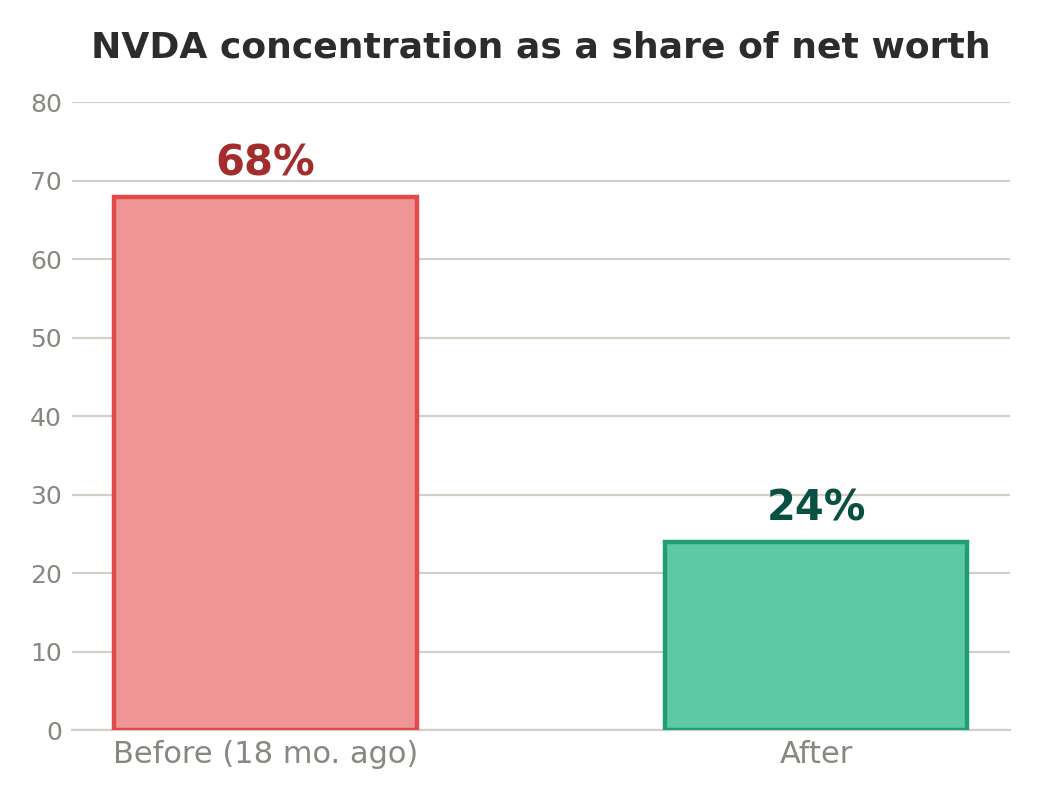
Two things were true at once, and she was treating them as one thing. Buying through the ESPP and holding ESPP shares are separate decisions. The purchase is a 15% discount applied to a 24-month lookback price, a known, contractual gain the day the shares land. Holding them afterward is an ordinary investment decision about owning more of a stock she already owns far too much of. By conflating the two, Grace had declined the discount in order to avoid the concentration, and then accumulated the concentration anyway through five years of RSUs. NVDA was 68% of the couple's net worth.
What We Did
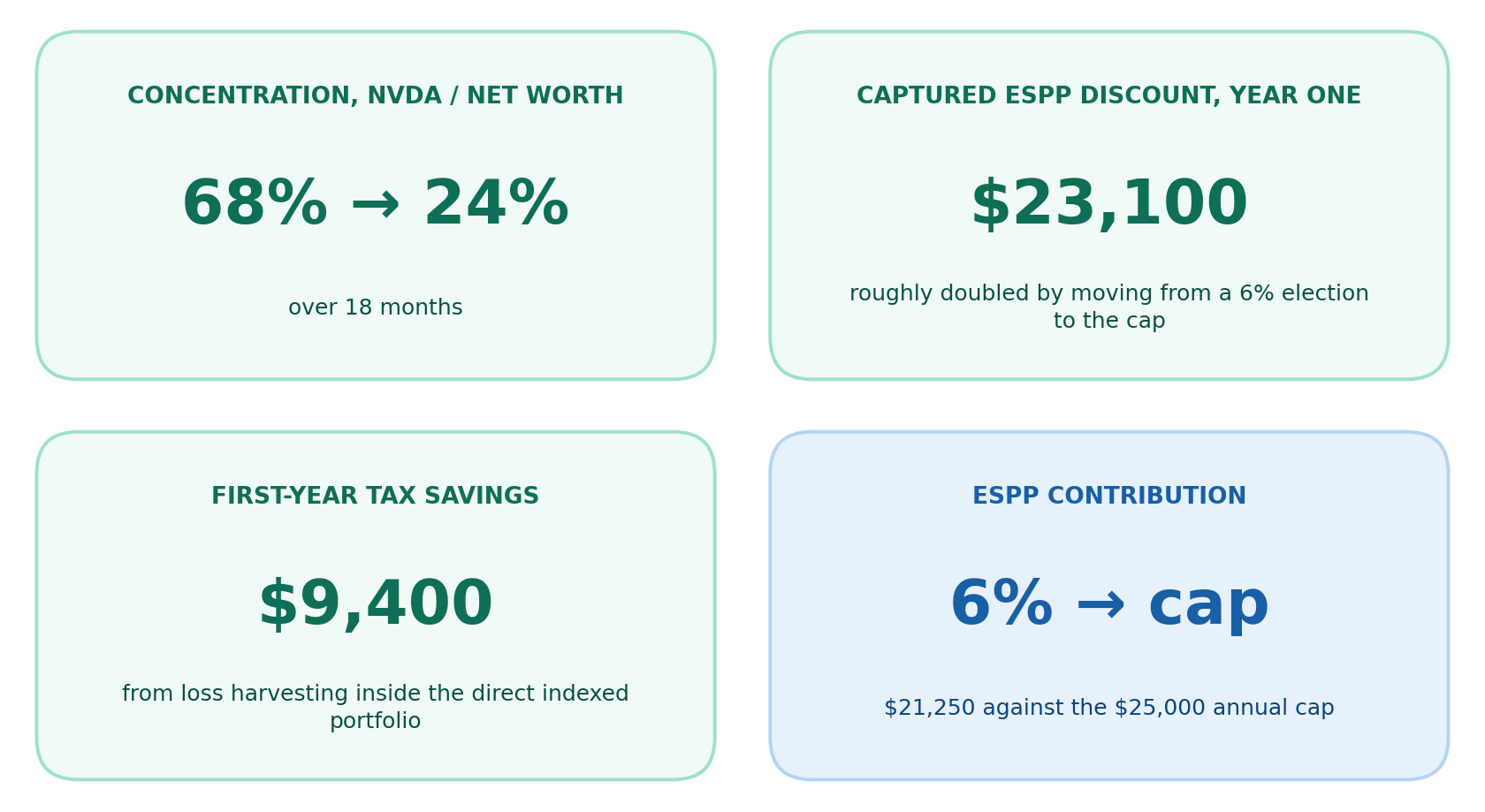
We separated the decisions. Grace went to the maximum contribution, roughly $21,250 of after-tax payroll against the $25,000 annual cap, and adopted a rule of selling the shares at each purchase date. The discount is captured; the concentration is not added to.
We also found something she didn't know she had. Grace enrolled in a new offering period in February 2026, near the high. When NVIDIA traded down through the summer and the August purchase price came in below her enrollment price, her plan's reset provision kicked in and re-based her 24-month lookback to the lower price. She'd been mentally writing off that offering period. It is now her most valuable one. We re-modeled her allocation around it.
Then we unwound the pile. Her older ESPP lots had crossed the qualifying-disposition threshold, so we sold those first for the better tax treatment, and sequenced the rest with specific lot identification to keep gains in the lowest brackets available. Proceeds moved into a direct indexed portfolio that harvests losses year-round, plus a 529 top-up for both kids and a municipal bond ladder for the state tax she pays as a California resident.
The Result
- Captured discount value roughly doubled, to $23,100 in year one, simply by moving from a 6% election to the cap
- NVDA concentration fell from 68% of net worth to 24% over 18 months
- $9,400 in first-year tax savings from loss harvesting inside the direct indexed portfolio
- She stopped treating one decision as two, and stopped feeling like maxing the ESPP was a bet
Why This Worked
Grace's benefits portal explained the ESPP mechanics correctly. Her brokerage showed her the concentration accurately. Neither could tell her they were unrelated questions. That connection only happens when one team is looking at the compensation plan, the portfolio, and the tax return together, which is exactly what a flat-fee fiduciary arrangement is built to do.
If your ESPP election has been the same number for three years, it's worth a second look.
This case study is a composite illustration based on real Alphanso client scenarios. Names and identifying details have been changed for privacy. Results are not guaranteed and will vary based on individual circumstances. All investing involves risk, including the possible loss of principal. Alphanso Inc is a registered investment adviser.

Schedule demo with our advisors
What to expect