The NVIDIA engineer who kept saying "I'll sell after earnings."
The Situation
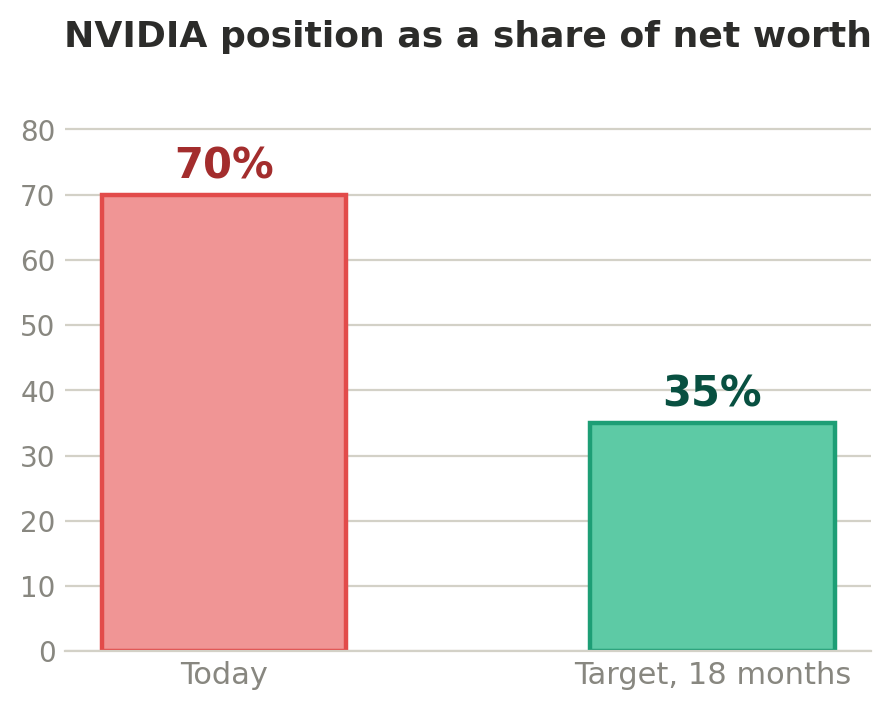
Leila is 41, a senior engineer at NVIDIA, eleven years into a career that quietly made her wealthy. Her RSUs vested straight through the stock’s historic run, and today her NVIDIA position is worth about $4.6 million - roughly 70% of her family’s net worth, most of it sitting at a cost basis under a tenth of today’s price. She wasn’t careless with money. She maxed her 401(k), funded 529s for both kids, and worked with a good CPA every spring. She knew the position was too big. She’d known for a while.
Her plan was always the same: “I’ll decide after the next earnings print.” November came - the stock jumped, and selling a winner felt foolish. February came - it dipped, and selling at a low felt worse. May came - it recovered, and she wanted one more quarter to confirm the trend. Three earnings nights, three different stories, zero shares sold. With the August 26 print approaching, she caught herself rehearsing the same script a fourth time. That’s when she called us.
The Gap We Found
The gap wasn’t concentration - Leila understood that risk better than most. The gap was that her sell decision had no owner and no trigger except an earnings date, which is precisely the trigger built to feel un-actionable in every direction: up means “don’t sell a winner,” down means “don’t sell at a low.” Her CPA saw the gains after they happened; nobody was responsible for turning “I should trim” into an actual schedule. And because she’d vested plenty but sold nothing, the flat 22% withholding on her RSUs was quietly falling behind what she’d actually owe - making September 15’s estimated tax deadline a second problem hiding behind the first.
What We Did
We took the decision away from earnings night entirely. Leila adopted a 10b5-1 trading plan - a written schedule, set up during an open trading window, that sells fixed amounts on fixed dates no matter what the stock or the headlines do. Hers sells equal tranches every two weeks for eighteen months, taking the position from 70% of net worth to under 35% without a single in-the-moment decision. Because the plan is pre-committed, it trades right through blackout periods and earnings prints - including August 26.
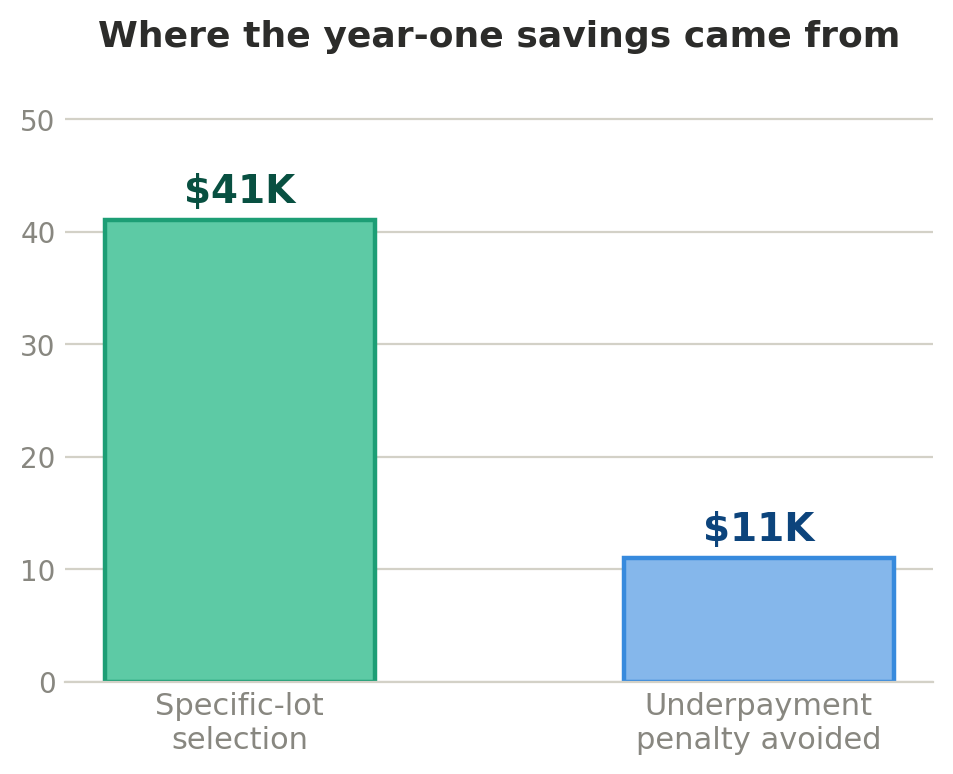
Within each sale, we used specific-lot identification - choosing which exact shares to sell - so the highest-cost-basis lots go first and every early tranche generates the smallest possible capital gain. For new RSUs, she adopted a simple sell-at-vest policy: shares are taxed as income the day they vest whether she keeps them or not, so selling that same week adds essentially no extra tax and stops the concentration from rebuilding itself.
Meanwhile, Alphanso’s AI agents parsed her payroll, measured the gap between what had been withheld and what she’d owe on the vests and scheduled sales combined, and calculated her September 15 estimated payment in advance. The proceeds are moving into a direct-indexed portfolio, where ongoing tax-loss harvesting offsets a portion of the gains the sell-down creates.
The Result
Why This Worked
Leila never had an information problem - she had a decision-architecture problem, and no single advisor was positioned to see it. Her CPA handled taxes, her broker handled trades, but nobody owned the plan that connected them. Because Alphanso looks at the portfolio, the payroll, and the tax calendar at once - and because our flat fee means we earn nothing from any particular trade - we could recommend the thing that actually fixed it: a rule instead of a decision.
If you’ve promised yourself you’ll sell “after the next print” more than once, we’d love to talk before the next one. Request a callback.
This case study is a composite illustration based on real Alphanso client scenarios. Names and identifying details have been changed for privacy. Results are not guaranteed and will vary based on individual circumstances. All investing involves risk, including the possible loss of principal. Alphanso LLC is a registered investment adviser.

Schedule demo with our advisors
What to expect