They lived through 2023 at Micron. Then 2026 happened.

The Situation
Dale is 49, a process integration engineer in Boise with eighteen years at Micron. His wife Kristen is 47 and teaches high school chemistry. They own their house, have two kids in high school, and have never carried a balance on anything.
They also remember 2023 clearly. Micron cut roughly 15% of its workforce and suspended bonuses that year, and Dale watched colleagues with longer tenure than his clear out their desks. He kept his job. What he took from it was a conviction that the memory business always comes back, which, three years and a spectacular run later, had become the reason he hadn't sold a share. Between ESPP purchases dating to 2012, RSUs, and company stock inside his 401(k), the couple held about $3.1 million of Micron: 71% of their net worth.
Kristen's read was different. She thought it was the top. They had been having the same conversation for six months without resolving it.
The Gap We Found
They were both right, and that was the problem. Dale was right that memory is cyclical and recovers. Kristen was right that a 71% position is not a view, it's an exposure. What neither of them had was the number that settles it: how much Micron stock they could afford to still own if the memory cycle did what it has twice done in five years and fell by half. Nobody had ever calculated that, because it requires knowing their spending, their tax picture, their retirement timeline and their portfolio at the same time.
What We Did
We started with the floor, not the forecast. We sized five years of household expenses and funded that entirely outside Micron, in Treasuries and a municipal bond ladder, so that no version of the memory cycle can reach their life. That single move changed the conversation from "sell or hold" to "how much do we want to keep."
Then we made the selling cheap. Idaho's flat 5.3% income tax treats capital gains as ordinary income with no preferential long-term rate, which removes one of the usual arguments for deferring a sale: at the state level, waiting doesn't help. We paired a 10b5-1 plan with a direct indexed portfolio that harvests losses year-round, and funded a donor-advised fund with $150,000 of their oldest, lowest-basis ESPP lots, the same charitable giving they were already doing in cash, routed to eliminate the embedded gain instead of realizing it.
The company stock inside Dale's 401(k) got its own treatment. Because those shares had appreciated enormously inside the plan, we ran a net unrealized appreciation analysis before any rollover, which let a large share of that gain be taxed at long-term capital gains rates rather than as ordinary income.
The Result
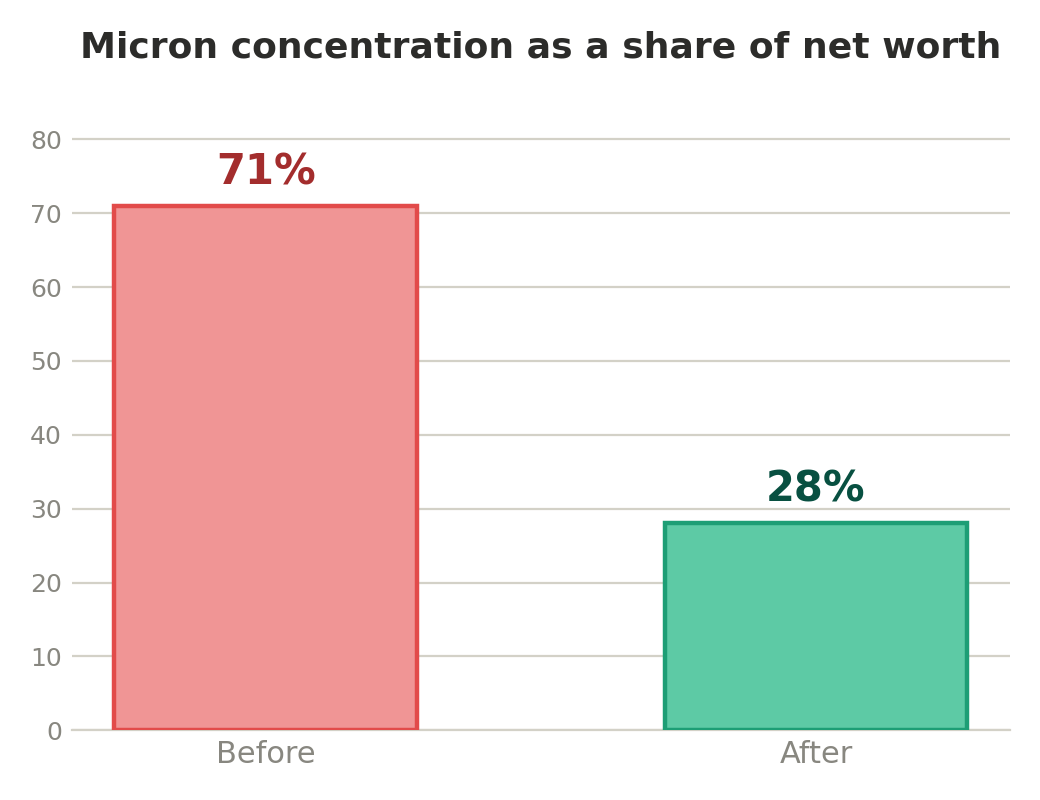
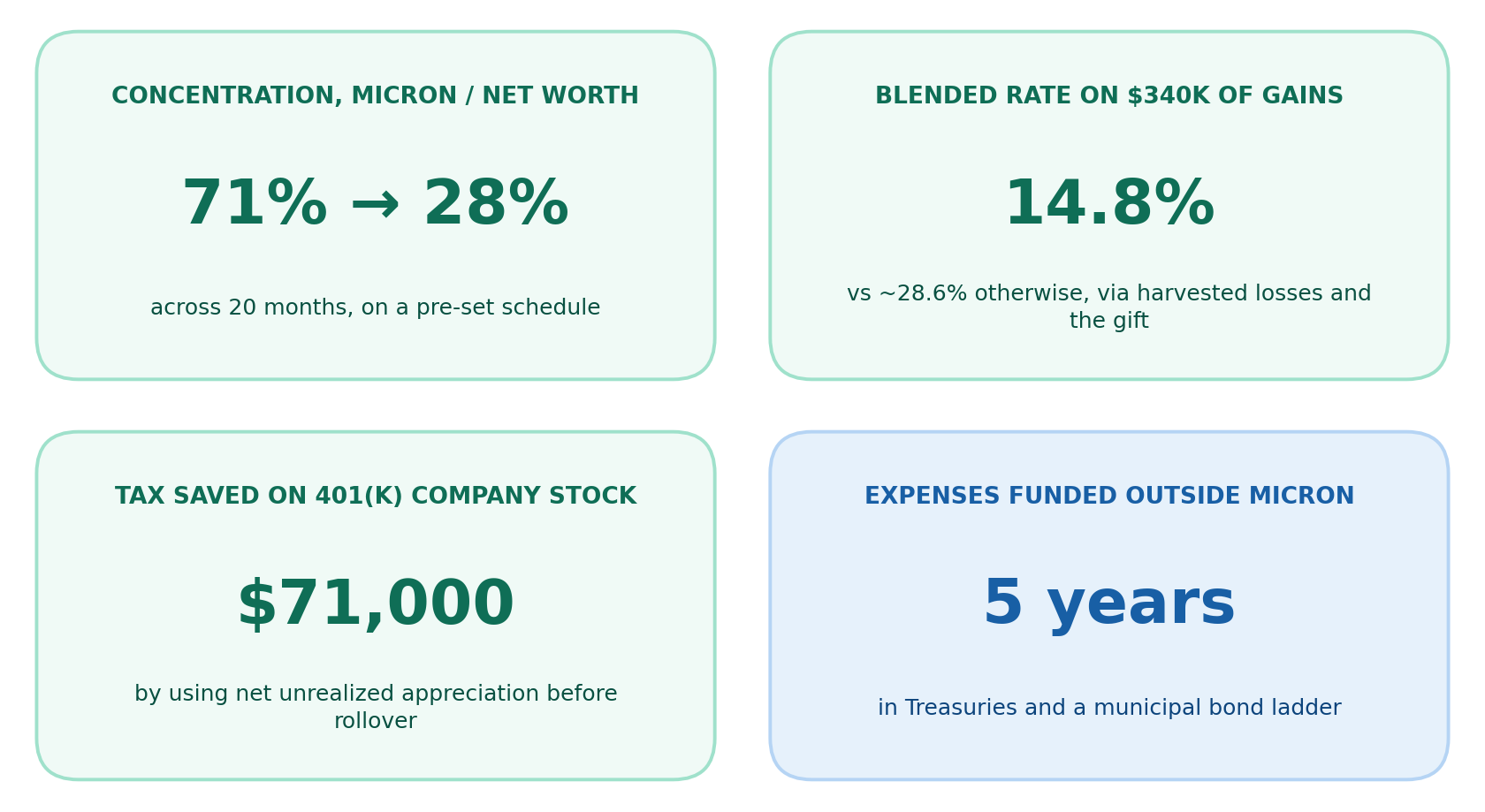
- Micron fell from 71% of net worth to 28% across 20 months, on a schedule set in advance rather than in reaction to a headline
- $340,000 of long-term gains realized at a blended 14.8% all-in rate instead of roughly 28.6%, through harvested losses and the charitable gift
- $71,000 in tax saved by handling the 401(k) company stock as net unrealized appreciation before rolling the rest
- Five years of expenses funded outside Micron, the number that finally ended the argument
Why This Worked
Dale's 401(k) provider knew about the 401(k). Their CPA knew about last year's return. Their broker knew about the brokerage account. The question they were actually asking, can we keep believing in this company without betting our retirement on it, didn't belong to any of them. It belonged to all of them at once. That's the gap Alphanso fills, and because we charge a flat fee, moving money out of Micron and into a bond ladder costs us nothing to recommend.
If you've held through a Micron cycle before, let's talk about the next one.
This case study is a composite illustration based on real Alphanso client scenarios. Names and identifying details have been changed for privacy. Results are not guaranteed and will vary based on individual circumstances. All investing involves risk, including the possible loss of principal. Alphanso Inc is a registered investment adviser.

Schedule demo with our advisors
What to expect