A 2022 grant, modeled at $42,000, vested at $784,000.

The Situation
Nadia is 34, a DRAM yield engineer in Boise, single, renting a two-bedroom near the airport because she keeps assuming she'll buy "next year." She joined Micron in 2022 on a four-year grant vesting a quarter at a time, and the grant was priced when Micron traded near $52.
The final tranche vested in October 2026, with the stock near $980. Eight hundred shares. A grant she'd mentally valued at about $42,000 when she signed the offer letter turned into roughly $784,000 in a single day.
She had been doing the sensible things: maxing her 401(k), keeping an emergency fund, contributing to the ESPP. What she had never done was anything that required a plan bigger than a paycheck.
The Gap We Found
Micron withholds federal tax on that vest at the statutory 22% supplemental rate. Nadia's actual federal marginal rate, with $784,000 of ordinary income landing on top of her salary, is 35%. Idaho's flat 5.3% means the state side roughly takes care of itself, but the federal gap was about $102,000, accruing underpayment penalties quietly from the moment the shares landed. She had no idea. There was no notification, because no single system she interacts with knows both what was withheld and what she'll actually owe.
What We Did
Alphanso's AI agents parse client payroll continuously. They caught the projected shortfall in August, before the October vest, which meant Nadia had the number in hand while she could still do something about it, rather than in April when the only remaining option is to write the check.
We funded the gap through a Q4 estimated payment. Then we set the rule that makes future vests uneventful: sell at vest. RSUs are taxed as ordinary income at the vest-date price, so selling that day produces essentially no capital gain. Diversifying costs her nothing in tax, which is the fact that usually goes unsaid and keeps people holding.
With the shares turned into cash, we could finally build the things her income had been supporting on paper for two years. A $310,000 down payment fund in short-term Treasuries, so a house purchase never depends on what memory prices did that quarter. A backdoor Roth, her first. A mega backdoor Roth through Micron's plan, which moved another $46,000 of after-tax savings into tax-free growth in year one. The remainder into a direct indexed portfolio that harvests losses against future gains.
The Result
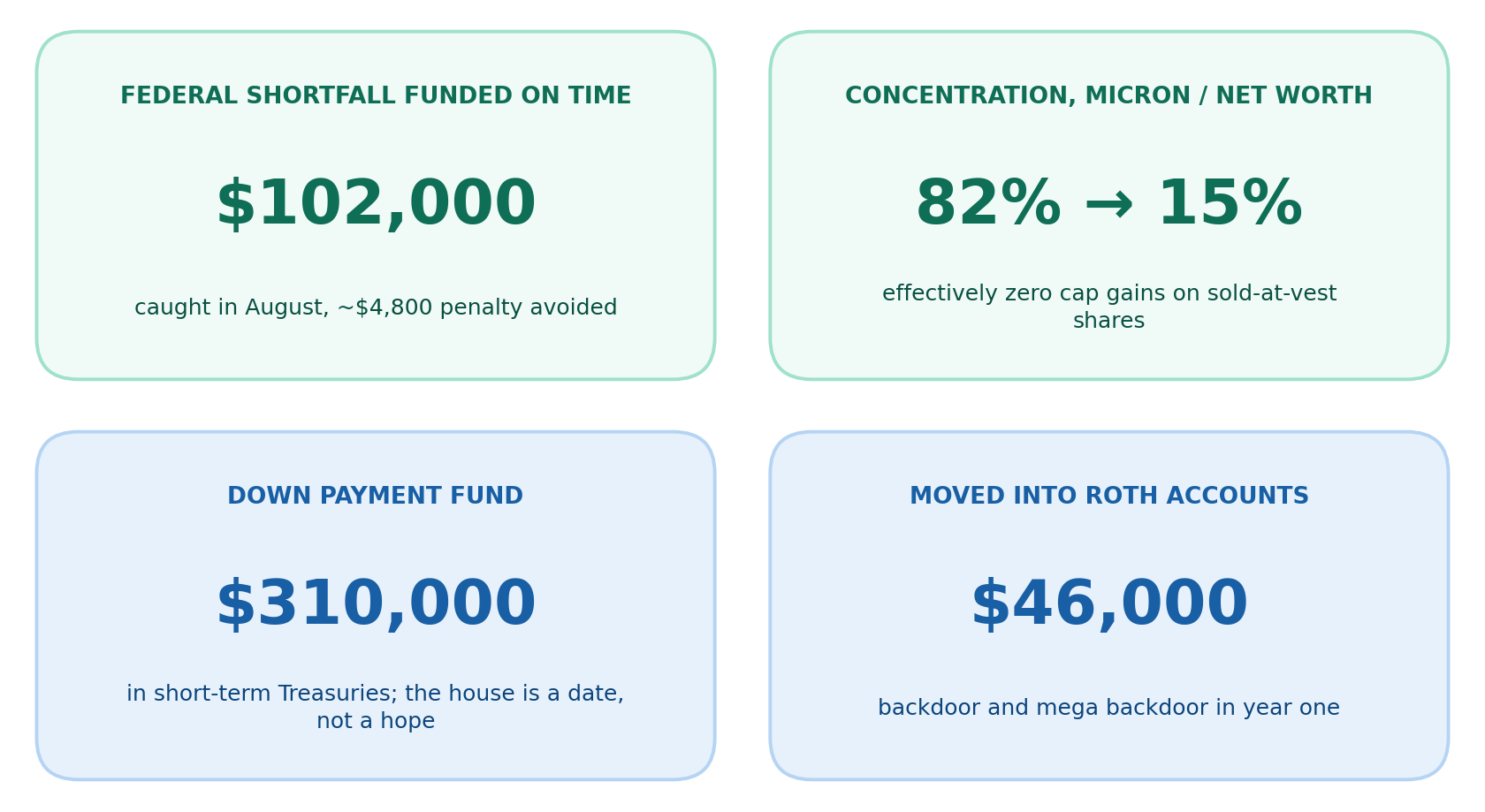
- A $102,000 federal shortfall identified in August and funded on time, avoiding roughly $4,800 in underpayment penalties
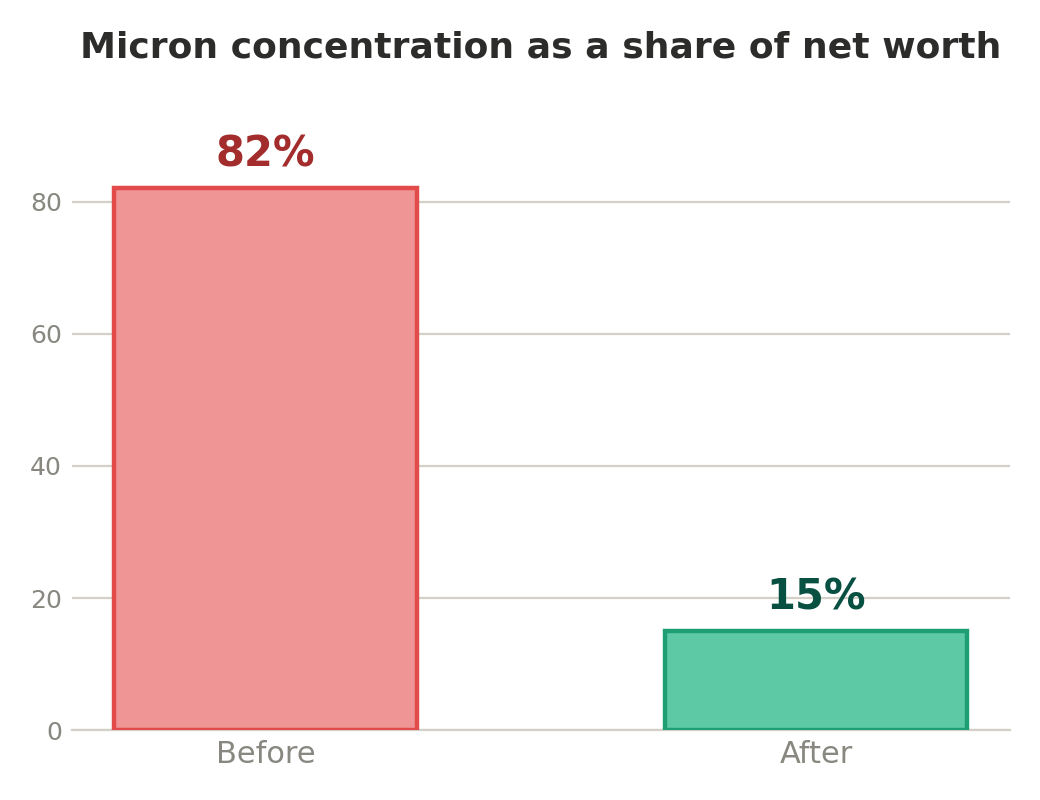
- Micron concentration fell from 82% of net worth to 15%, with effectively zero capital gains tax on the sold-at-vest shares
- $310,000 down payment fund built in Treasuries, the house is now a date, not a hope
- $46,000 moved into Roth accounts in the first year through backdoor and mega backdoor contributions
Why This Worked
Nadia's payroll system applied exactly the right statutory withholding rate. Her brokerage showed her exactly the right share count. Neither of them is designed to tell her she was $102,000 short, because neither can see both halves of the equation. Alphanso watches the gap between what's withheld and what's owed all year, and a flat fee means we had no reason to suggest anything other than selling and diversifying.
If a big vest is coming, the time to model it is before it lands.
This case study is a composite illustration based on real Alphanso client scenarios. Names and identifying details have been changed for privacy. Results are not guaranteed and will vary based on individual circumstances. All investing involves risk, including the possible loss of principal. Alphanso Inc is a registered investment adviser.

Schedule demo with our advisors
What to expect