Laid off from Snowflake. We built a 60-day security plan.

The Situation
Mike, 43, spent six years as a senior product manager at Snowflake, based in San Mateo. He and his wife, an ICU nurse, were raising two kids, ages 9 and 12. By most measures he was the picture of a careful earner: he maxed his 401(k) every year, kept a six-month emergency fund, and had steadily let his vested SNOW shares accumulate rather than sell impulsively.
Then a reorg swept through his org and his role was cut. He left with a severance package: roughly four months of pay delivered as a lump sum, a payout for unused PTO, and benefits that would end at the close of the month. The shock was real, but so were the practical questions. How long could the family go without his income? What happens to health insurance? And what does he owe in taxes on all of this?
The Gap We Found

Mike had a CPA who filed his returns and a brokerage where his RSUs sat, but no one connected the dots on a year that had suddenly changed shape. His severance would arrive as a supplemental wage payment, withheld at the flat 22% federal rate, well below his actual bracket, quietly setting up a filing-season surprise. At the same time, his SNOW position had grown into a large slice of the family's net worth, and the very drop in income that felt threatening also opened a rare, time-limited planning window that no one was watching for.
What We Did
We started with cashflow, because certainty calms everything else. We mapped the severance and emergency fund into a month-by-month runway so Mike could see, in plain numbers, that the family had roughly eleven months of coverage. That let him run a real job search instead of grabbing the first offer out of fear. Next we tackled health coverage: because household income would fall for the rest of the year, an ACA marketplace plan with subsidies came in cheaper than COBRA, saving about $900 a month for comparable coverage.
On taxes, we flagged the 22% severance withholding gap and set aside the difference so April would not sting. We then sold a portion of his vested SNOW shares using specific-lot identification, choosing lots near their cost basis to minimize capital gains. That single move reduced his concentration risk and funded part of the runway without a meaningful tax hit. Finally, with his income far lower for the balance of the year, we converted a slice of his traditional IRA to a Roth at a much lower bracket, turning a hard year into a lasting tax advantage.
Throughout, Alphanso's AI agents recalculated his estimated taxes against the new income picture and flagged the correct quarterly payment before the deadline, so the plan stayed accurate as his situation shifted week to week.
The Result
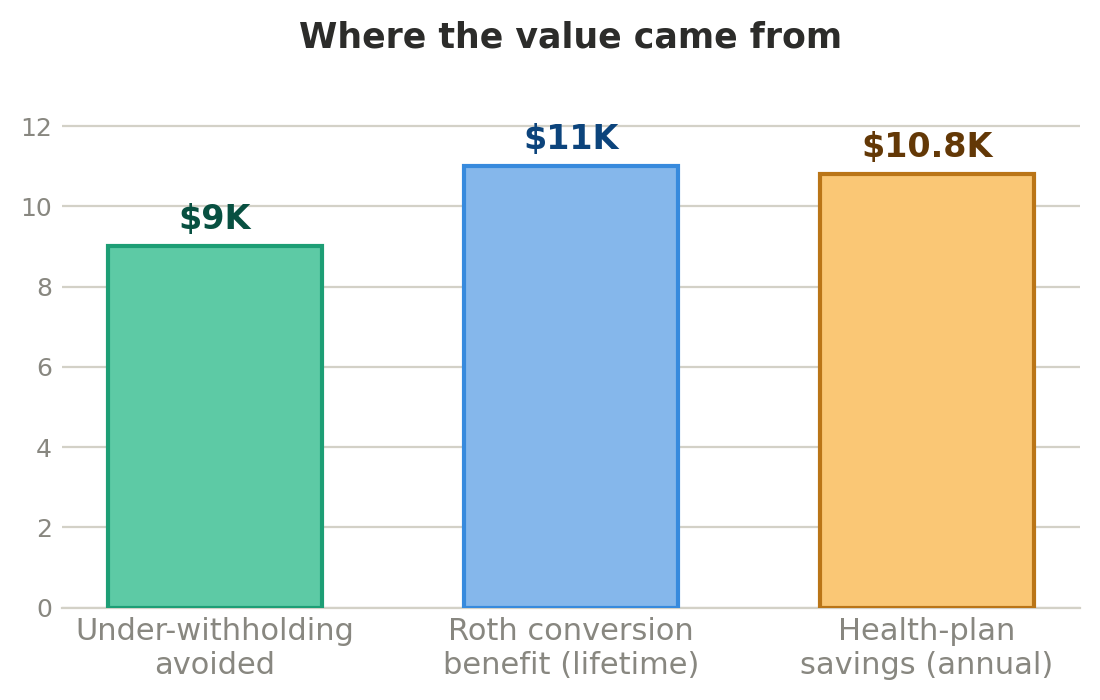
- Avoided roughly a $9,000 under-withholding surprise by correcting the severance tax gap ahead of filing.
- Captured an estimated $11,000 lifetime tax benefit from a Roth conversion executed in a low-income year.
- Cut health insurance costs by about $900 a month by choosing a subsidized marketplace plan over COBRA.
- Gained roughly eleven months of clear runway, and the confidence to job-search on his own terms.
Why This Worked
None of Mike's existing advisors were doing anything wrong. The problem was that no one was looking at everything at once. Alphanso's flat-fee, fiduciary model meant we had no incentive tied to his assets, only to the quality of the plan, so we could act fast across cashflow, insurance, investments, and taxes as a single team. When the pieces are integrated, a layoff stops being a crisis and becomes a set of decisions you can actually make. If you are navigating a job change or a severance package, you can talk it through with us at request a callback.
This case study is a composite illustration based on real Alphanso client scenarios. Names and identifying details have been changed for privacy. Results are not guaranteed and will vary based on individual circumstances. All investing involves risk, including the possible loss of principal. Alphanso LLC is a registered investment adviser.
.png)
Schedule demo with our advisors
What to expect