She budgeted 22% withholding. Half her vest crossed into 37%.

The Situation
Diane is 50, a vice president at Broadcom in Palo Alto, married, with a son in his second year of college. Her base and bonus are substantial, but equity is the larger half of her compensation, and her grants vest annually, three refresh grants now stacking into the same November window, worth about $1.6 million together.
She is organized. She keeps a spreadsheet, she pays quarterly estimates, and she had budgeted her November tax liability at the 22% supplemental rate her pay stubs showed the previous year.
The Gap We Found
Two things broke that spreadsheet. First, the flat 22% supplemental federal rate applies only until cumulative supplemental wages pass $1 million in a year; above that, the rate jumps to 37%. Diane's stacked vest crossed that line mid-event, so her blended withholding came in near 31%, not 22%. Second, 31% still wasn't enough: at her income, her true combined federal and California rate approaches 49%. The shortfall was about $290,000.
There was a smaller, stranger gap underneath it. Diane didn't actually know whether her grants vested annually or quarterly. Broadcom issues both, and the only authority is the individual grant notice, which she had never opened for two of her four grants.
What We Did
We read all four grant notices and built a four-year vest calendar from the actual documents: which grant, which month, how many shares, at what modeled prices. That calendar is now the spine of her plan, and it answered the cadence question permanently.
We sized and funded the $290,000 through a Q4 estimated payment before January 15. Then we used the shape of the year rather than fighting it. A year with $1.6 million of vesting income is the single best year to make a large charitable gift, so we bunched several years of her family's giving into a $250,000 donor-advised fund contribution, funded with her lowest-basis shares, deducted at full market value in her highest-rate year, with the embedded gain never realized.
The November tranche now sells at vest under a 10b5-1 plan, producing essentially no capital gain and a predictable pool of cash. That cash funds the estimates, a California municipal bond ladder for the reserve she needs to hold anyway, and a direct indexed portfolio for the rest.
The Result
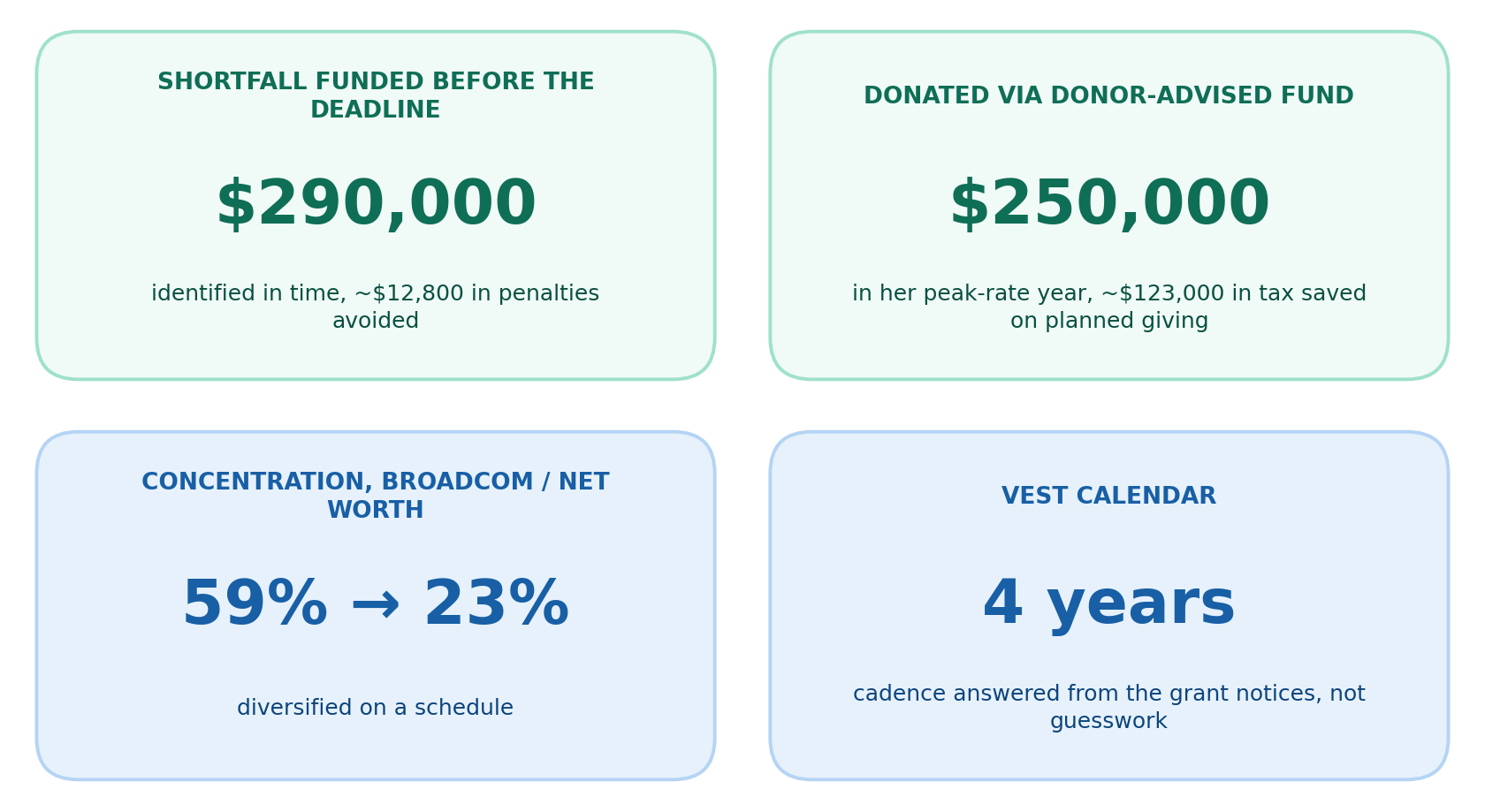
- $290,000 shortfall identified and funded before the January deadline, avoiding an estimated $12,800 in penalties
- $250,000 donated through a donor-advised fund in her peak-rate year, worth roughly $123,000 in tax saved on giving already planned
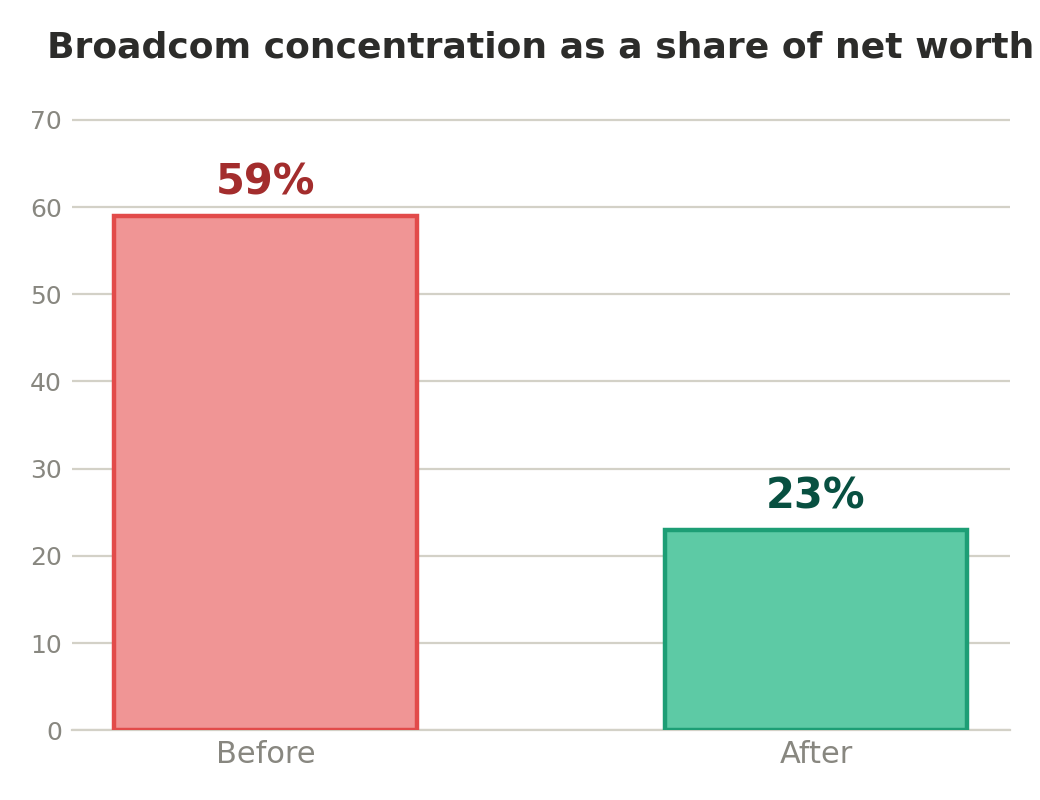
- Broadcom concentration fell from 59% of net worth to 23%
- A documented four-year vest calendar, the cadence question answered from the grant notices, not from guesswork
Why This Worked
Diane wasn't disorganized; she was working from the only data she had, which was last year's pay stub. The $1 million supplemental threshold, the true marginal rate, the charitable bunching opportunity and the vest cadence are four separate specialties, and the answer only appears when they're on the same page. Flat-fee and fiduciary means the recommendation to give away $250,000 of assets was as easy for us to make as any other.
If your equity vests in one big month, let's find out what it actually costs.
This case study is a composite illustration based on real Alphanso client scenarios. Names and identifying details have been changed for privacy. Results are not guaranteed and will vary based on individual circumstances. All investing involves risk, including the possible loss of principal. Alphanso Inc is a registered investment adviser.

Schedule demo with our advisors
What to expect