Everyone else's chip stock was up. His was the opportunity.
%203.webp)
The Situation
Hiroshi is 37, an ASIC engineer at Broadcom's Irvine site, married to a pediatric nurse, with a toddler and a second child on the way. He'd been at Broadcom five years and had done something most people don't: he believed in the company enough to buy additional shares in a taxable brokerage account, adding meaningfully near $470 and again near $495.
2026 was not a fun year to have done that. Broadcom spent the year well below its high while his friends at NVIDIA, AMD and Micron watched their stock run. He described it as being the only person at the barbecue who lost money in a boom, and he had started to wonder whether he should just sell everything and buy one of theirs.
The Gap We Found
Hiroshi was looking at an unrealized loss and seeing a mistake. It was also an asset, one with a short shelf life. Those underwater lots could be harvested to create a tax loss that offsets gains elsewhere, including the gains he'd eventually realize unwinding his much older, much lower-basis RSU shares. Nobody had made that connection, because his brokerage shows the loss and his CPA sees the year after it ends.
There was a trap sitting right next to the opportunity. Hiroshi's RSUs vest quarterly and his ESPP purchases on a fixed schedule. Every one of those is a purchase of Broadcom stock. Selling at a loss within thirty days before or after any of them triggers the wash sale rule and disallows the loss, which is how well-intentioned harvesting quietly produces nothing at all for employees with recurring equity events.
What We Did
We mapped every scheduled Broadcom acquisition on his calendar, four vest dates and two ESPP purchase dates, and harvested into the clear windows between them, using specific lot identification to sell only the lots with a basis above market. That produced $96,000 of realized losses with no disallowance.
Those losses now do two jobs. A portion offsets ordinary income each year at the annual limit; the bulk is carried forward and banked against the capital gains he'll realize as we unwind his low-basis position. That's the move that turns a frustrating year into the cheapest diversification window he'll get.
We also changed the behavior that created the concentration. Hiroshi now sells at vest, zero capital gain since RSUs are taxed at the vest-date price, and his ESPP shares are sold at purchase, capturing the discount without adding to the position. Proceeds go into a direct indexed portfolio that harvests losses year-round, a 529 for each child, and a cash reserve for the baby's arrival. He kept a deliberate Broadcom stake, because conviction is allowed; it just isn't allowed to be 63% of the balance sheet.
The Result
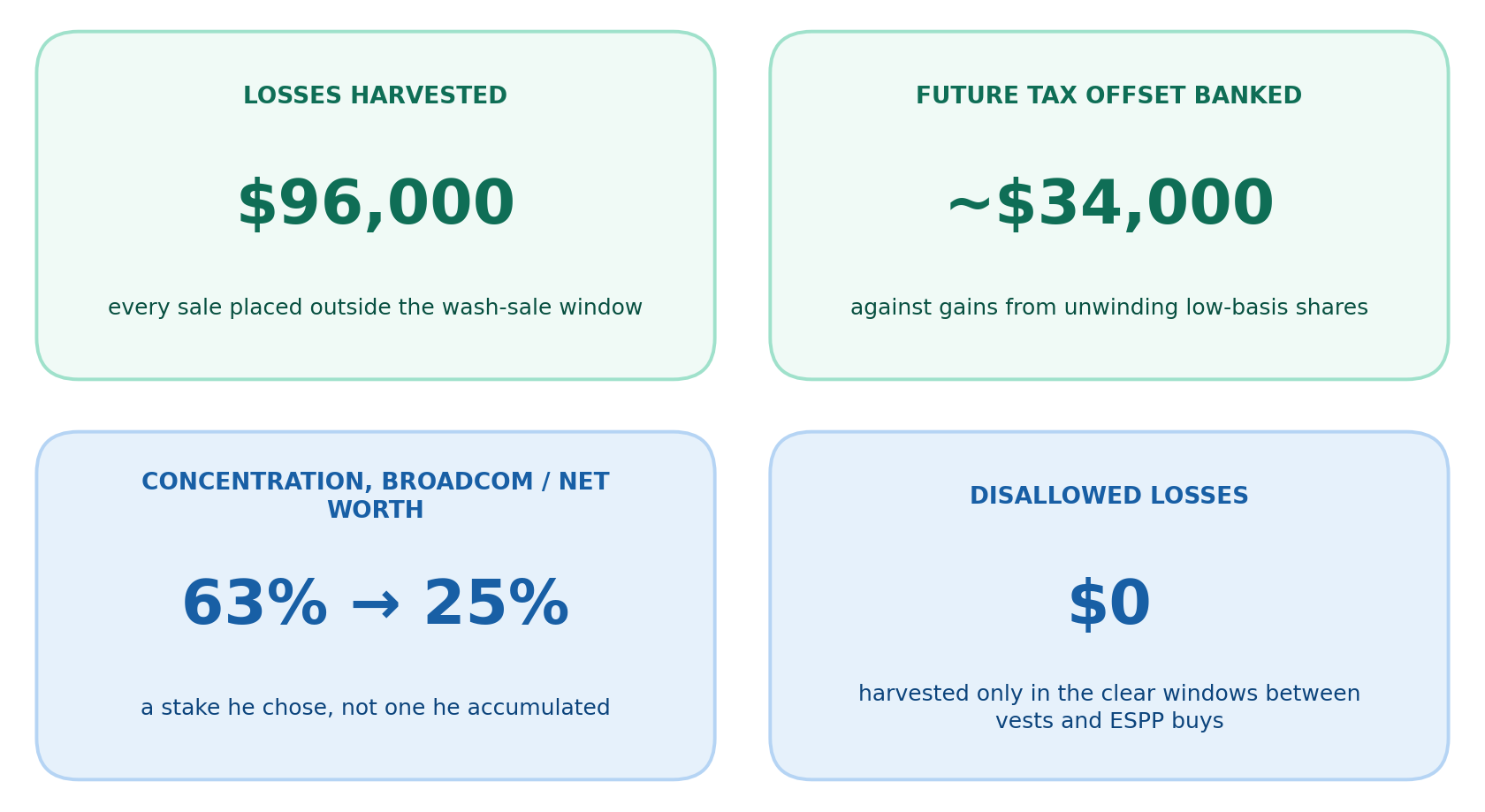
- $96,000 of losses harvested, with every sale placed outside the wash sale window created by his vests and ESPP purchases
- Roughly $34,000 of future tax offset banked against the gains from unwinding his low-basis shares
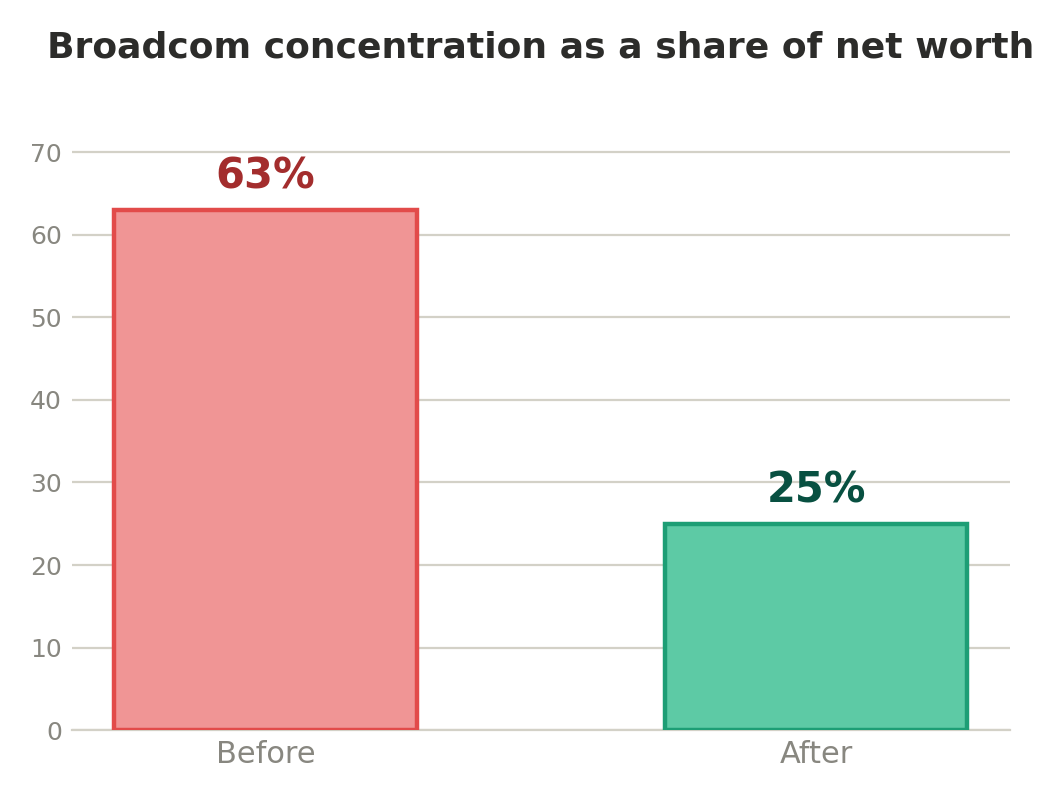
- Broadcom concentration fell from 63% of net worth to 25%, with a stake he chose rather than one he accumulated
- Sell-at-vest and sell-at-purchase rules adopted, so the concentration doesn't quietly rebuild
Why This Worked
The year Hiroshi thought was his worst was the one that made everything else affordable. Seeing that required holding three things at once: the lot-level basis, the vest and ESPP calendar that governs the wash sale rule, and the long-term diversification plan the losses were going to pay for. No single advisor in his life had all three. A flat fee meant the strategy that shrinks his concentration was as easy for us to recommend as the one that doesn't.
If your stock is down and everyone else's is up, there may be more in that than you think.
This case study is a composite illustration based on real Alphanso client scenarios. Names and identifying details have been changed for privacy. Results are not guaranteed and will vary based on individual circumstances. All investing involves risk, including the possible loss of principal. Alphanso Inc is a registered investment adviser.

Schedule demo with our advisors
What to expect