Three AMD grants landed on the same November day.
The Situation
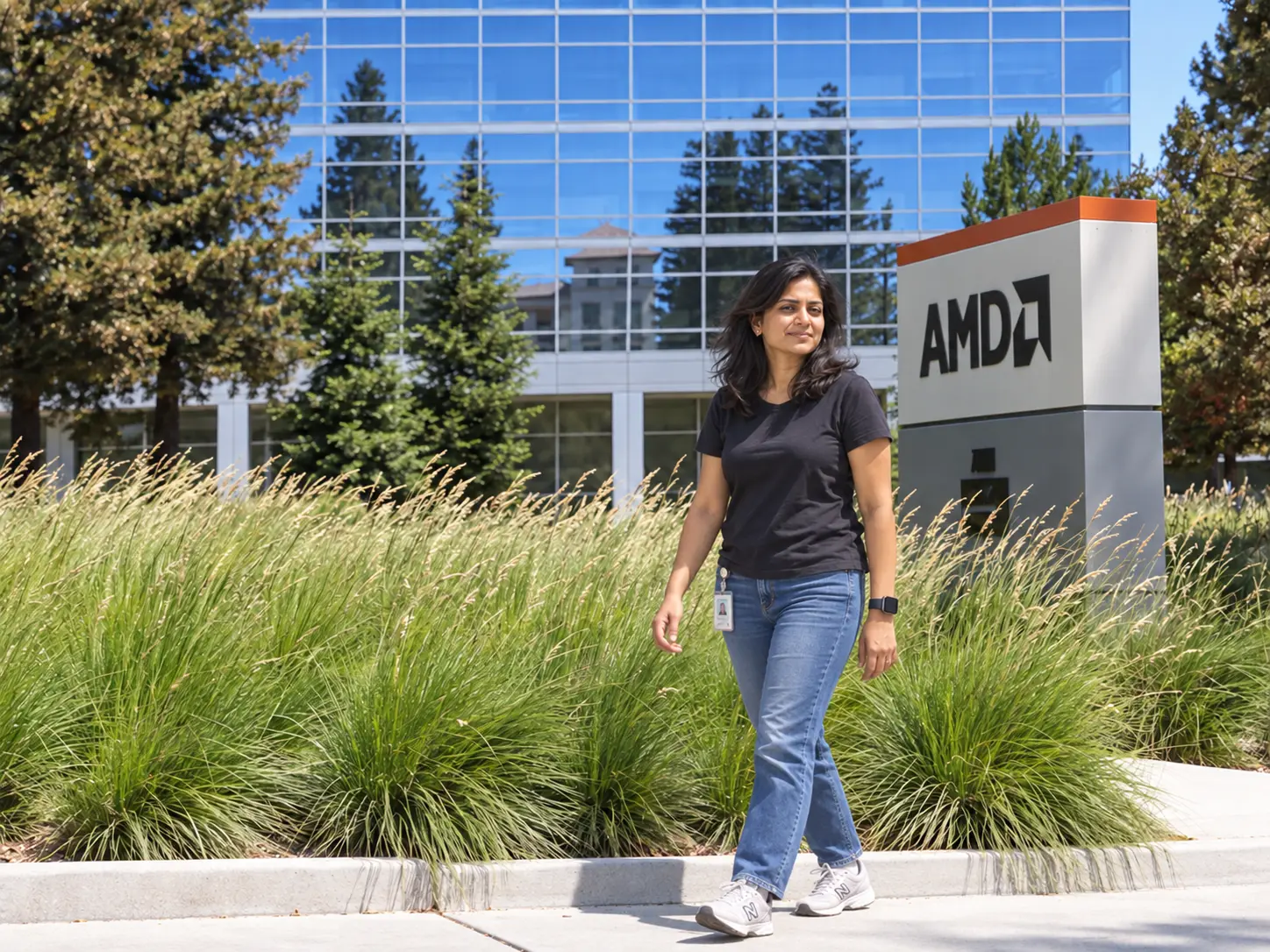
Anjali is 36, a silicon design engineer in Santa Clara, married with a four-year-old. She joined AMD in 2023 and has been granted equity every year since. Her base is $232,000. Her equity is on AMD's standard three-year schedule, vesting a third at a time, annually.
That structure is easy to ignore for the first two years and impossible to ignore in the third. By November 2026, Anjali had three overlapping grants all vesting in the same month: the final third of her 2023 grant, the middle third of 2024, and the first third of 2025. The 2023 grant had been priced when AMD traded near $118. It vested with the stock above $500.
The Gap We Found
The number on her November vest statement was going to be roughly $680,000, in one day, on top of a full year of salary. AMD would withhold federal tax at the statutory 22% supplemental rate. Anjali's actual federal marginal rate is 35%, and California's marginal rate sits well above the 10.23% flat rate applied to supplemental wages. The arithmetic gap was about $88,000 before anyone made a single investment decision. Nobody had told her anything wrong. It's simply that annual vesting compresses a year of tax exposure into a single payroll event, and the people who could have modeled it (her CPA, her employer, her brokerage) each only see one piece of it, and only after the fact.
What We Did
We ran the vest in September, two months early. Alphanso's AI agents pulled her year-to-date payroll, projected the November tranche at a range of stock prices, and produced a liability number she could act on rather than absorb. She funded the shortfall through a Q4 estimated payment on January 15 instead of discovering it the following April.
We also gave her a decision rule she'd never been given. Anjali sells the full tranche at vest. Because RSUs are taxed as ordinary income at the vest-date price, selling that same day produces essentially zero capital gain, so she is not giving up tax efficiency by diversifying, which is the fear that keeps most people holding. The shares she already owned from prior years, with their very low basis, are a different problem and got a different tool: a 10b5-1 plan selling on a schedule over 24 months, set up during an open window so the decisions run automatically.
Proceeds went into a direct indexed portfolio that harvests losses year-round against her future gains, a backdoor Roth for the first time in her career, an increased 401(k) deferral, and a 529 for her daughter.
The Result
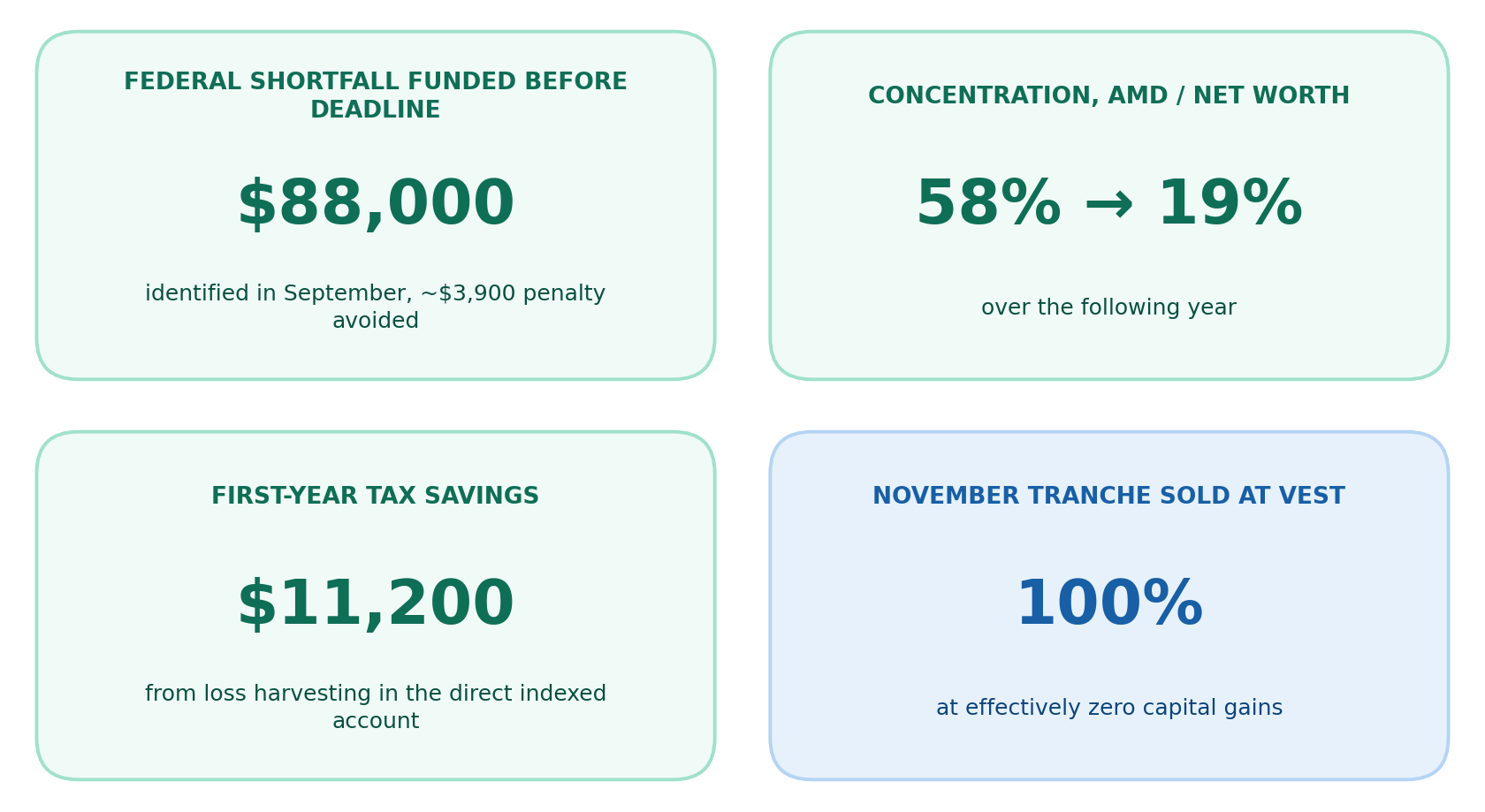
- $88,000 federal shortfall identified in September and funded before the January deadline, avoiding roughly $3,900 in underpayment penalties
- 100% of the November tranche sold at vest at effectively zero capital gains
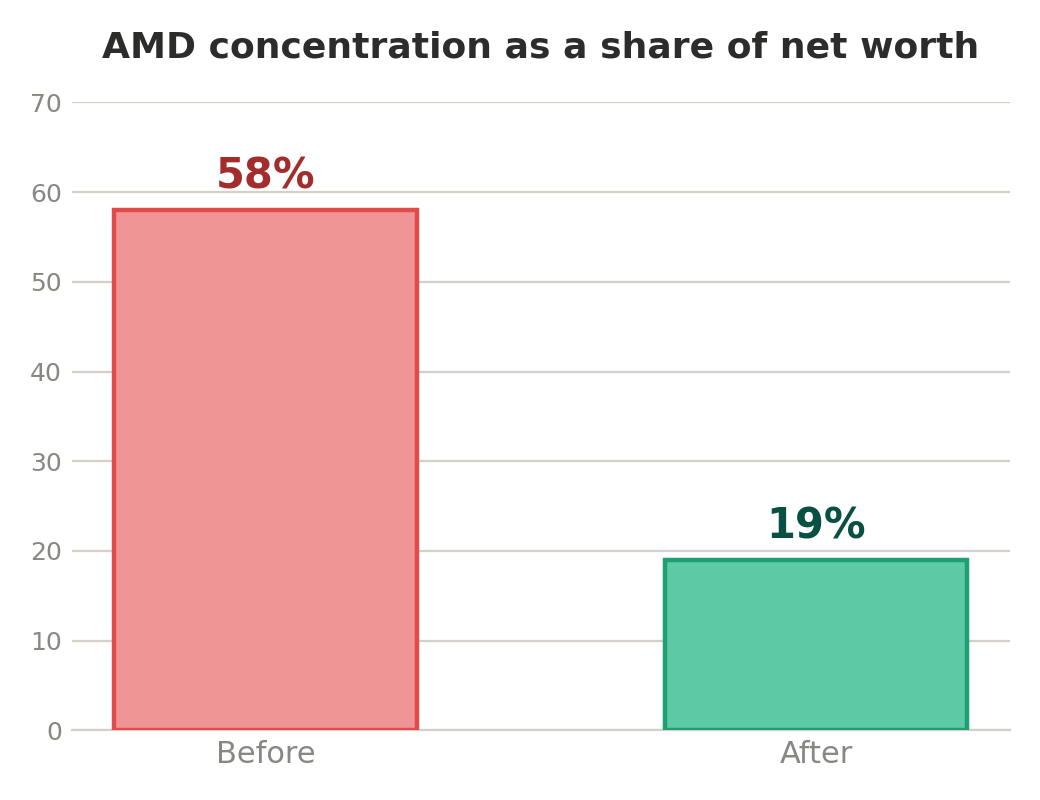
- AMD concentration fell from 58% of net worth to 19% over the following year
- $11,200 in first-year tax savings from loss harvesting inside the direct indexed account
Why This Worked
Anjali's situation wasn't complicated. It was just never assembled. Her compensation schedule lived in one system, her tax picture in another, her portfolio in a third. The whole insight was that annual vesting turns a manageable tax question into an emergency if you meet it in April instead of September. Flat-fee and fiduciary means we had no reason to tell her anything other than "sell it the day it vests," even though that shrinks the assets we look after.
If your grants all land in the same month, let's model it before it happens.
This case study is a composite illustration based on real Alphanso client scenarios. Names and identifying details have been changed for privacy. Results are not guaranteed and will vary based on individual circumstances. All investing involves risk, including the possible loss of principal. Alphanso Inc is a registered investment adviser.

Schedule demo with our advisors
What to expect