Why Your September 15 Payment Can't Fix the Quarter You Missed in June
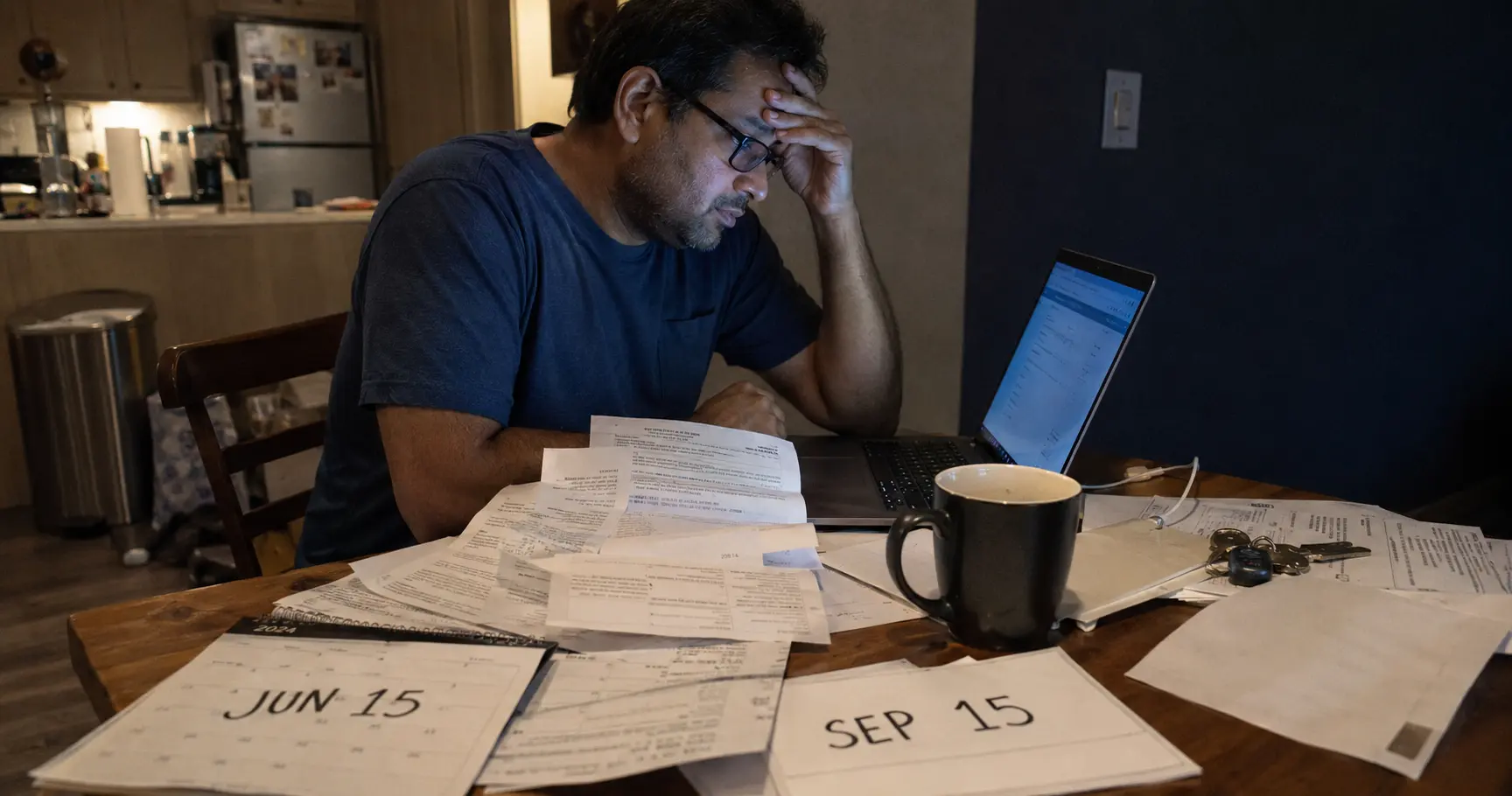
Every fall, I talk to tech employees who had a big vest early in the year, realized in August they were under-withheld, and sent the IRS a large check on September 15 thinking they were square. They weren't. The penalty clock on the earlier quarter had already been running for three months, and no later payment can turn it back.
Here's the sentence that explains almost every estimated tax penalty I see: the IRS computes the penalty quarter by quarter, not for the year as a whole. Catching up later stops the bleeding. It does not undo it.
What's Actually Happening
The tax system is pay-as-you-go. You're required to pay tax as income arrives, in four installments, and each installment has its own deadline: April 15, June 15, and September 15 of 2026, then January 15 of 2027.
Notice those aren't real calendar quarters. The second "quarter" covers only April and May. That two-month window is where a lot of vest income lands, and it's due faster than people expect.
Each deadline is scored separately. If you underpay the June 15 installment, the IRS charges you interest on that specific shortfall (currently at a 7% annual rate, reset each quarter) for every day it stays unpaid. A big payment on September 15 satisfies the September installment and stops the meter on the June shortfall going forward. It does not erase the 92 days of charges that already accrued between June 15 and September 15.
Let's make it concrete. Say you're a senior engineer at NVIDIA, married filing jointly, and a $300,000 RSU tranche vested in May. Your employer withheld at the default 22% supplemental rate, but between salary, your spouse's income, and the vest itself, your actual marginal rate is 35%. That's a $39,000 withholding shortfall on the vest, and because the income arrived in May, most of it was due with the June 15 installment.
You catch it in August and pay $39,000 on September 15. The penalty on those 92 days: roughly $688. Not catastrophic. But if you'd waited until you filed in April 2027, the same shortfall would have cost about $2,274. And this penalty is nondeductible interest. It buys you nothing.
Why This Catches Smart People
The misconception is simple and almost universal: "As long as I've paid enough by year end, I'm fine." It feels right because that's how the annual tax return works. Total tax minus total payments equals refund or balance due.
But the penalty computation on Form 2210 (the IRS form that scores your installments) runs on a different logic entirely. It asks, for each deadline: how much had you paid by that date, and how much were you required to have paid? Money you send in October is invisible to the June column. The two systems share the same tax return, which is exactly why people conflate them.
The second thing nobody tells you: the IRS treats withholding and estimated payments differently, and the difference is enormous. Withholding from your paycheck or your RSU vests is deemed paid evenly across the year, no matter when it actually happened. An estimated payment counts only on the date you send it. That asymmetry is the single most useful lever in this entire topic, and we'll come back to it.
What You Can Do About It
You have four options, roughly in order of how often I recommend them.
The Bottom Line
The estimated tax penalty is computed per quarter, and no later payment can retroactively fix an earlier installment. Only two things can: the 110% safe harbor, set up in advance, or extra withholding, which the IRS pretends was spread across the whole year. If you have uneven vest or exercise income in 2026, one of those two levers almost certainly applies to you, and September 15 is the last easy checkpoint before year end.
If you had a big vest or exercise this year and aren't sure where you stand against your safe harbor number, we're happy to dig into your specific situation. Start at alphanso.ai/demo.
This content is for educational purposes and does not constitute personalized financial or tax advice.

Plan with an expert
What to expect


.png)
.jpg)
.png)
.png)